
Two awards in one year
In the same year you won the BIG SEE award and a Silver Winner at the NY Architectural & Interior Design Awards. What does it mean to you that your work received two international confirmations in such a short time?
The BIG SEE award and the Silver Winner at the NY Architectural & Interior Design Awards are an important moment in the development of our studio. Receiving two international confirmations in the same year is especially significant because the quality of our work is recognised beyond the market where we create every day.
Behind those results stand continuous investment in knowledge, careful development of projects and the dedication of the whole team. I am proud that this work has been recognised. These awards give us extra confidence and encouragement to keep developing our own authorial expression, with equal responsibility toward every project that follows.
Your work was recognised in New York. Does it happen that the world recognises the value of what is created in Montenegro before we do?
We often feel the need to seek confirmation of our own quality somewhere far away. As if what is made here becomes more valuable only once it gets an international stamp. But the quality existed before the award. Recognition does not create the value of a project, it makes it more visible. I would like us to trust our own authors more, even before someone recognises them beyond our borders.
What part of the work behind these two awards has the public never seen, and without which there would be no awards?
All the checks and corrections that come before the final photograph. The public sees the chosen solution, but not how many options we considered, what we rejected and how many conversations we had to reach that result.
The work of aligning the idea with what is actually built is especially invisible. You need to explain a detail, check a material and recognise in time where a problem could arise. That part of the job demands a lot of concentration and responsibility. When it is done well, its value is often seen precisely in the fact that nothing looks problematic.
What did your team have to learn, change or raise to a higher level to reach a year with two international awards?
As a studio grows, you can rely less and less on one person seeing, checking and solving everything. You need clear communication, shared responsibility and a common understanding of the quality we want to achieve.
It matters to me that team members understand the reason behind a decision, because then they can recognise a problem and propose a solution. Quality rises when everyone takes part with care and responsibility. That is why I see these awards also as a success of the collaboration we are building inside the studio.
If you had done the award-winning projects five years ago, what would you not yet have been able to solve at this level?
Today I recognise the consequences of a decision much earlier. I can predict where a technical problem will appear, what will need extra explanation for the contractor and which choice may later determine the whole project.
Experience also brings a better sense of priorities. You see more clearly where to hold firm, where there is room for change and what deserves the most attention. That is why I believe an architect’s development shows in the quality of the questions they ask before they draw anything. Part of the problems you solve simply because you recognised them in time.
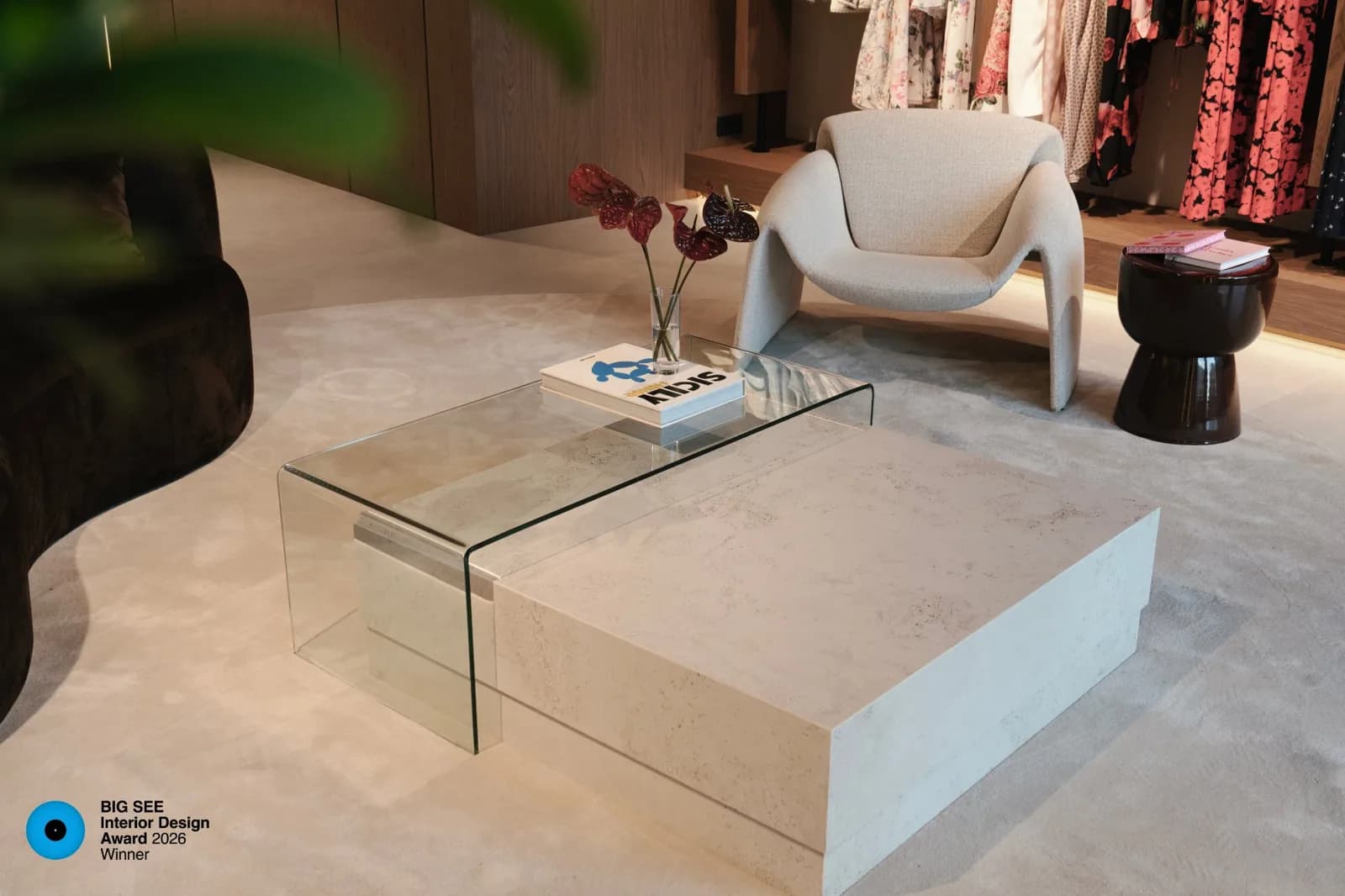
Render, budget and luxury
Does a beautiful render mean an interior is well designed?
A beautiful render can make an excellent impression, but only the technical design shows how well thought through a space really is. Behind the picture there must be precise dimensions, worked-out details, coordinated installations and solutions the contractors can understand and build.
An architect must know how materials will join, how something will be fixed and how the space will work in everyday use. That is where I see the biggest difference among architects: in the ability to bring what they present to a quality realisation. A render shows a promise. A built space shows how much knowledge stands behind it.
„A render shows a promise. A built space shows how much knowledge stands behind it.”
What is the most expensive sentence a client can say while furnishing a space?
“We’ll sort that out along the way.” Some decisions really can wait, but for others you pay later through rework. If the position of lighting, installations or the dimensions of furniture are not coordinated in time, the problem appears when something has already been built or ordered.
That is why technical preparation has a value the client often does not see right away. It prevents costs that have not yet arisen. It is much easier to change a line on a drawing than to move an installation inside a finished wall. A good project raises in advance the questions that would become expensive on site.
Which is a bigger luxury today: an expensive interior or an interior that looks like no other?
I think it is much easier today to make an expensive space than an authentic one. With money you can buy the costliest marble, furniture and lighting, but you cannot buy identity. True luxury begins where the need to impress others ends. For me the most expensive space is one that has character, not a price tag.
Is there a moment when a bigger budget starts to spoil a project?
There is a moment when the availability of everything makes choosing harder. Every single element can be exceptional, but their combined value does not guarantee a good space. If we keep adding yet another striking material, yet another designer piece and yet another effect, we lose the hierarchy. We no longer know what matters and where the eye should come to rest.
A bigger budget gives you the chance to carry out decisions with higher quality, but it also demands discipline. You must know when a space has received what it needs, even if the client can afford much more.
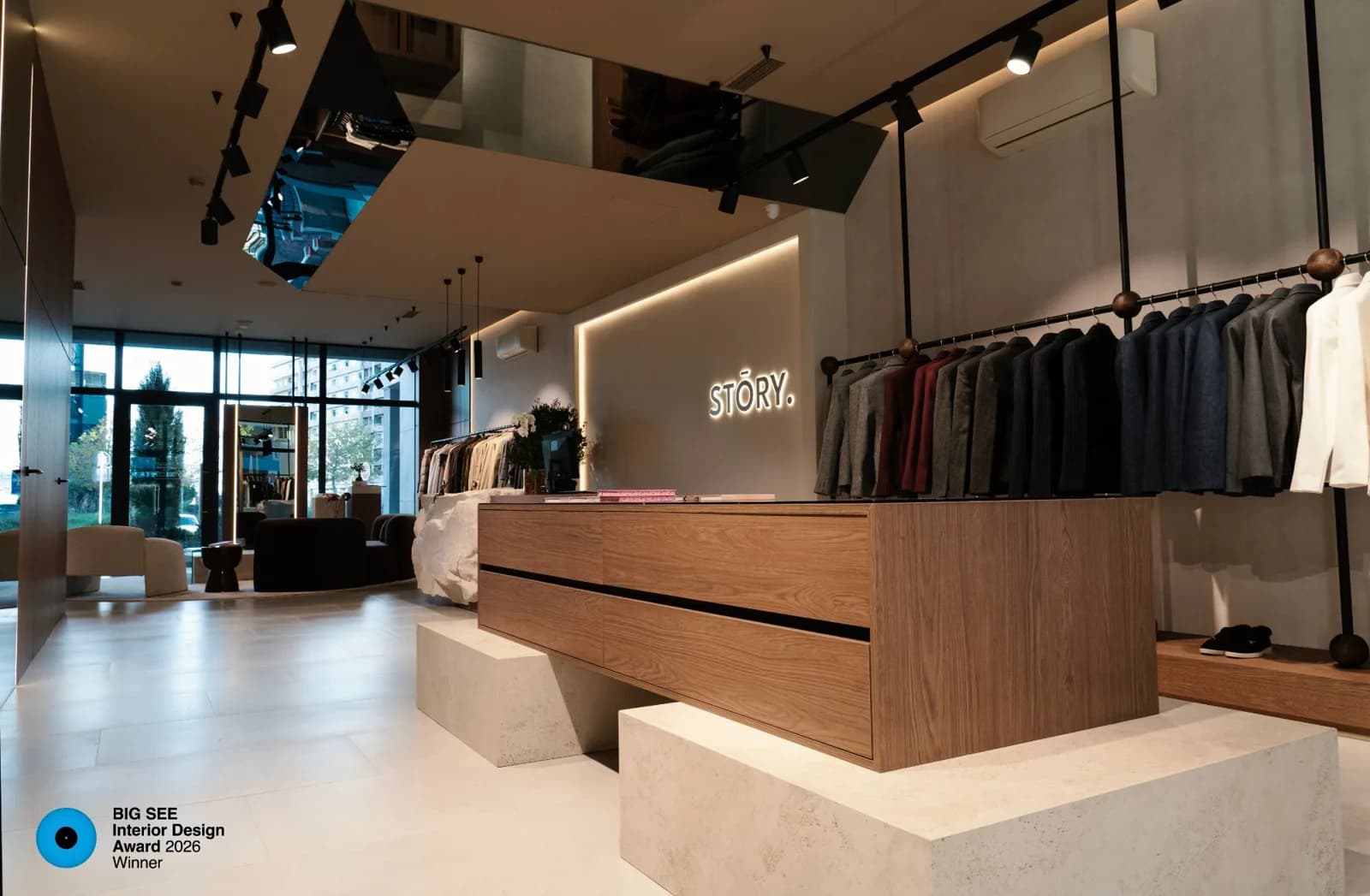
Stance, taste and trust
Would you rather design a space that everyone will like, or one that some will adore and others reject completely?
A space that provokes emotion. I do not believe authentic architecture has to please everyone. If you try to satisfy everyone’s taste, you risk making something with no stance of its own. That does not mean architecture should provoke at any cost, but I think it must have a reason for existing exactly as it is.
Can an architect win an international award for a space in which they themselves would not want to live?
Of course, because a good architect does not design their own life into every space. They have to understand other people’s habits, needs and emotions. What is ideal for one person can be completely unacceptable to another. I think professional maturity lies precisely in the ability to create something exceptional that does not have to be your personal choice.
How many times does an architect have to say “no” for a project that deserves an international award to come about?
Many more times than people think. Creativity is not only the ability to come up with something new, but also the courage to discard what is not good enough. Sometimes the most important decision on a project is the one not to do something. The hardest thing to defend is simplicity, because it is often wrongly read as a lack of ideas.
Is it harder to win an international award or to persuade a client to give up a bad idea?
They are two completely different kinds of challenge. An award is the result of a long process, while the relationship with a client is something you build every day. The biggest challenge is not telling a client they are wrong, but showing them why another solution may be better for them. A good project comes about when there is trust, not when someone wins an argument.
„A good project comes about when there is trust, not when someone wins an argument.”
A studio where knowledge is shared
Looking at these two awards, which decision do you consider the most important: the one you made on the project itself, or the one you made years earlier about how you would build the studio?
The decision to keep investing in knowledge and to build every part of the work seriously. A single project can bring recognition, but the way you work determines how many times you will be able to achieve a quality result.
It was also important to me that the studio be a place where knowledge is shared. People who learned with us are developing their careers and offices today, and we keep improving ourselves. When I look at these awards, I see them in the context of that wider journey: everything we learned, passed on and gradually raised to a higher level.
How do you feel about the fact that many of your trainees now own their own offices?
Knowledge is one of the rare values that grow when shared. That is why I see the success of our trainees as a success of our training too. Many of them learned 3ds Max with us, improved their work, started charging better for it and opened their own offices. That confirms we passed on something truly valuable.
We do not see them as competition. I believe better people in the profession raise the standards for all of us. And we keep investing in our own knowledge, technical development and realisation, with the same curiosity and ambition with which we started.

People came to you to volunteer and learn. How did you recognise who would really make use of that opportunity?
By what they do between two conversations. Someone listens to the explanation, tries on their own and comes back with a more precise question. You can see they worked and now want to understand what stopped them. With such a person, not knowing at the start is not a problem.
It is much harder when the same question keeps being repeated and the previous explanation was never even tried. A mentor can guide, but cannot go through the attempt in the other person’s place. That is why initiative tells me more than initial speed or confidence. People progress at different paces, but their own effort has to be there.
Is a year of work in a studio enough for someone to think they have learned the job?
In a year you can learn a lot, but you cannot expect to have rounded off your knowledge and be ready for every situation. To put it figuratively, you may be 30% of the way: you have a foundation, you understand certain processes and you can do part of the work independently. Only through different projects, mistakes and responsibility for your own decisions do you begin to realise how much is still left to learn.
What you did during that year matters too. Simply being present in the studio does not mean you absorbed the knowledge. How much did you try on your own? How did you take corrections? Did you want to understand why we do something, or just get instructions on how to finish the task? Two people can spend the same time beside me and come out with completely different levels of knowledge.
I am still educating myself today. I finished my degree, got my master’s, have experience and international awards, and yet every year I go through at least four or five different foreign courses and professional trainings. I invest my time and money because I know there are areas in which I can be better. That is why I find it hard to understand the belief that someone has finished learning after a year. I can share experience, explain and shorten someone’s path. But I expect the person to put in their own effort.
After the awards
Does success become dangerous at the moment you start to believe you can no longer make a mistake?
I think that is exactly the moment creativity begins to weaken. Awards can bring confidence, but they should not remove doubt. I would like there always to be a certain amount of questioning, because it pushes a person to look for better solutions. The most dangerous thing is when you stop being curious.
If someone took away all your awards, references and the studio’s name tomorrow, what would be left of your success?
What would be left is experience, knowledge and the way I think. Awards are precious, but they cannot be the foundation of a professional identity. What you build over the years is not just a portfolio but the ability to look at every new problem from a different angle. Success is much more stable when it does not depend on outside confirmation.